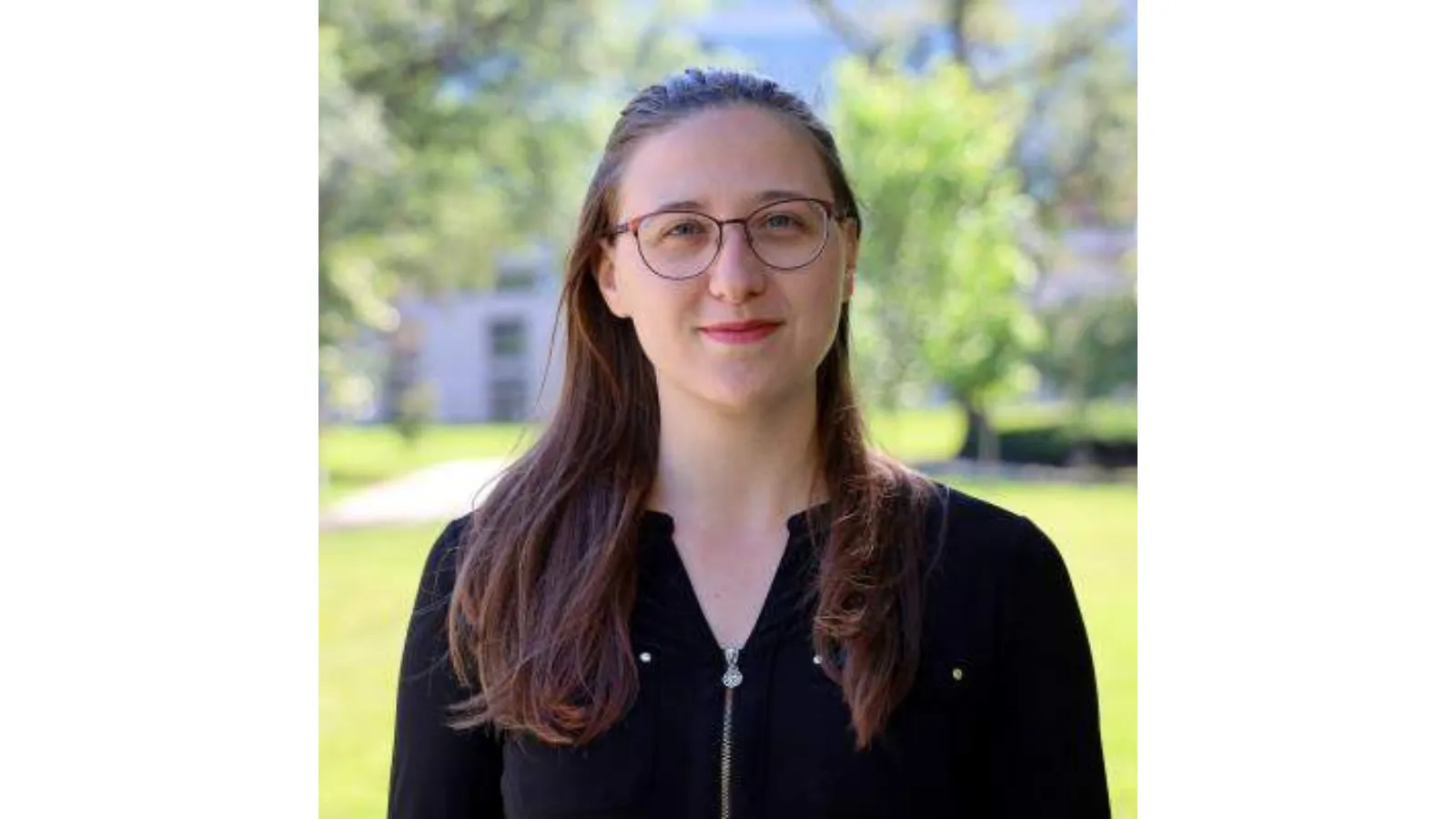
Join us for a Quantitative Area Brownbag with Dr. Fernanda Schumacker (College of Public Health, Department of Biostatistics, The Ohio State University)
Title: Beyond Normality: Flexible Linear Mixed Models for Repeated Measurements
Abstract: Repeated-measures data in health and behavioral research often violate the assumptions standard models rely on: residuals can be skewed and outlier-prone, latent traits may not follow a normal distribution, and data may be correlated across multiple sources. Under these conditions, standard models can lack robustness and produce invalid statistical inferences. This talk centers on skewlmm, an R package that extends the normal linear mixed model using the scale mixture of skew-normal class of distributions, accommodating skewness and heavy tails while also accounting for within-subject serial dependence through several useful dependence structures. I illustrate the package on real longitudinal data, including tools for model selection and evaluation, and discuss recent extensions of this framework to multilevel structures. I close with two ongoing extensions beyond the mixed-model setting: a Bayesian item response model, based on a Dirichlet prior to relax the normality assumption on a latent trait, applied to quality-of-life questionnaire data with polytomous items; and an open measurement question about whether multiple imperfect biomarkers of an underlying construct can be combined using structural equation modeling. By the end of this talk, you will have a new tool you can apply to your own repeated-measures data, a sense of how this framework is expanding to more complex data structures, and two ongoing directions that I look forward to having your input on.
About Fernanda Schumacker: Dr. Fernanda Schumacher is an Assistant Professor of Biostatistics in the College of Public Health at The Ohio State University. Her research focuses on developing robust statistical methods for complex health and behavioral data, particularly longitudinal and repeated measures studies that involve challenges such as skewness, outliers, time dependence, censoring, and missing data. She specializes in regression and mixed-effects modeling and is committed to translated methodological advances into practice through open-sour R software. Dr. Schumacher earned her Ph.D. in Statistics from he University of Campinas (Brazil) in 2021 and collaborates extensively with clinical and public health researchers, including studies of multiple sclerosis and other longitudinal health outcomes.