Psychology graduate students, research staff receive NSF fellowships

Two doctoral students and two research lab managers in the Ohio State Department of Psychology have received the National Science Foundation Graduate Research Fellowship, one of the most prestigious and competitive awards available to graduate students in the sciences.
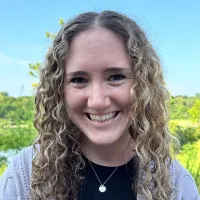
Recipients Miranda Stiehl and Cheryl Tan are both first-year students in the department’s social psychology graduate program. Helen Devine, who oversees Professor Kurt Gray’s Deepest Beliefs Lab, will begin a doctoral program this autumn at Yale University, while Caitlin Cunningham, manager of Julie Golomb's Vision and Cognitive Neuroscience Lab, will begin her cognitive neuroscience doctoral studies at Ohio State.
The NSF fellowships provide three years of financial support to graduate students over a five-year period, including an annual $37,000 stipend and $16,000 educational allowance. The foundation issued only 12 this year in social psychology—meaning that Ohio State researchers received a quarter of the awards in that field.
“This is exciting news and reflects the rich historical focus of Ohio State’s Social Psychology Area on not only conducting the best research, but also providing the best training for graduate students,” said Professor Baldwin Way, who coordinates the department’s social psychology graduate program.
“We prioritize graduate student training in our teaching, management, hiring, and how we spend our funds.”
Founded in 1952 to sustain and advance the American scientific workforce, the NSF Graduate Fellowship Program supports exceptional students in full-time, research-based graduate programs in STEM fields. Applicants submit a personal statement, research proposal and letters of recommendation.
The fellowship supports “individuals who demonstrate the potential to make significant contributions” in the sciences, technology, engineering and mathematics, as well as STEM education, according to the program website.
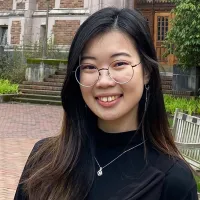
Advised by professors Lisa Libby and Kristen Lindquist, Tan studies self-concept, emotion and culture and published work last year in the Journal of Positive Psychology. The award will help her continue research on nostalgia and shared reality processes, or what’s involved when someone sees themselves as sharing an inner state with another person.
“It's an honor that reflects not only my time and investment in social psychological research, but all my mentors and advisors who believed in the value of our work and my potential going forward,” Tan said.
Stiehl, advised by Gray, is interested in how religion both divides and unites people across moral and political lines, and her first-authored work has appeared in publications including Psychology of Religion and Spirituality and the Encyclopedia of Religious Psychology and Behavior. The NSF fellowship will support Stiehl’s research on the intersection of religion with pressing societal issues, such as political polarization and artificial intelligence.
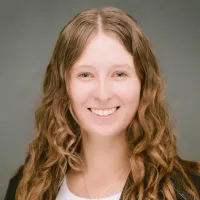
In her work with Golomb's lab, Cunningham has looked at the effects of attention on memory and visual perception, a line of research she plans to continue with support from her National Science Foundation award at Ohio State. Specifically, she is interested in spatial attention and working memory and using fMRI to examine how shifts in attention are reflected in the brain.
"To me, this award reflects the potential for this research to advance our knowledge of the neural mechanisms involved in attention," she said.
"Beyond that, it is a confirmation that I belong in this field and have what it takes to succeed in research, which is a testament to the outstanding mentorship I've received during my past two years as a post-baccalaureate researcher at Ohio State."
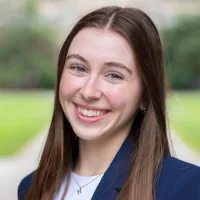
Devine, Gray's lab manager, studies the intersection of moral psychology and the psychology of law—specifically, how psychological biases shape the ways people assign blame and determine who counts as a victim. Her research has been published in Policy Insights from the Behavioral and Brain Sciences, among other journals.
The NSF fellowship will support Devine’s work translating psychological science into legal system improvements, which she will continue in Professor Melissa Ferguson’s Implicit Social Cognition Lab at Yale.
“This was a huge deal for me personally: It not only frees up time and space during graduate school to focus fully on research, but it's such a recognition of the hard work put in from undergrad to now,” Devine said.
“Academia comes with a lot of setbacks and rejections, so getting a win is really motivating.”
