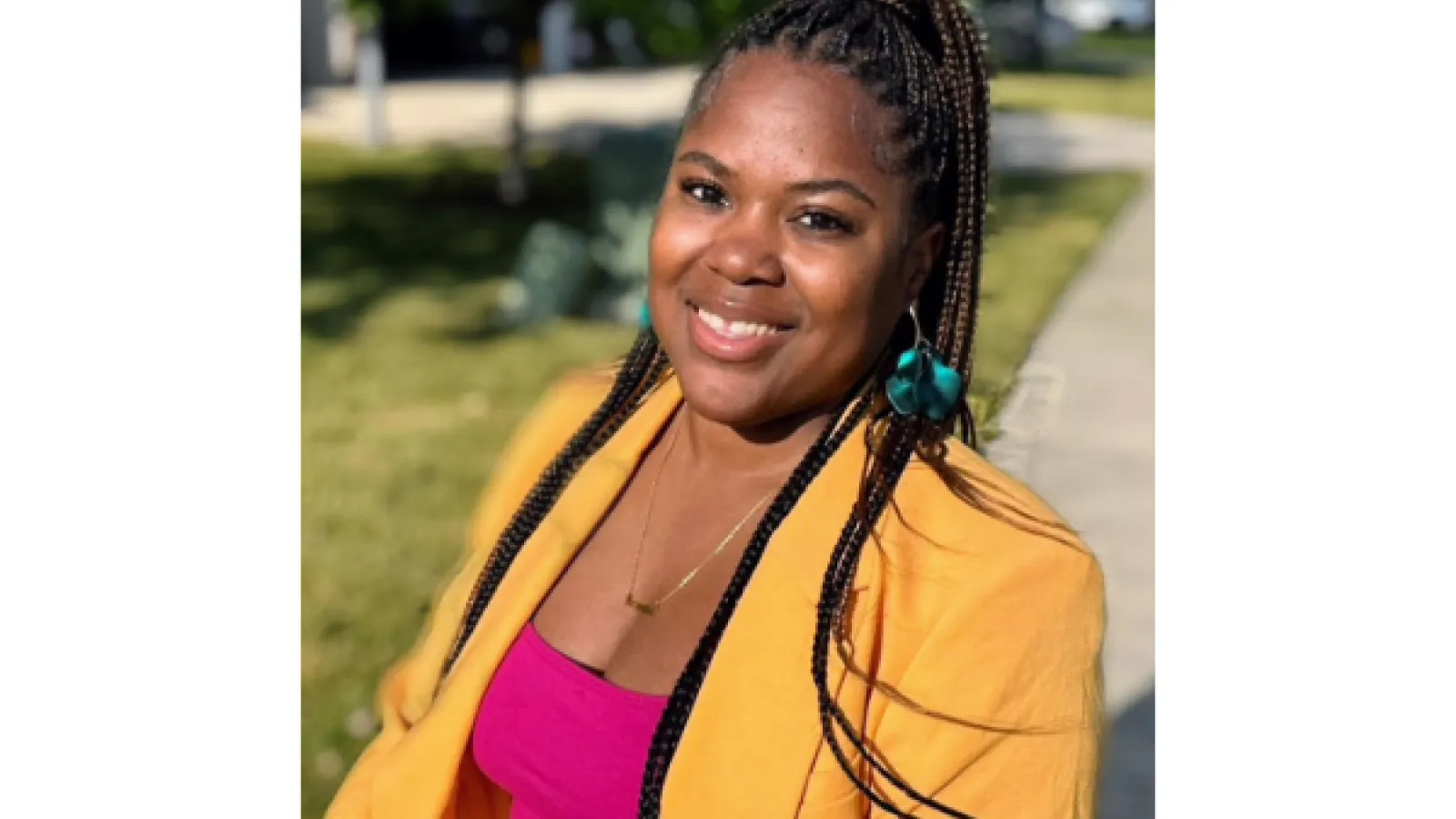
Join us for our Social Behavioral Interest Group (SBIG) Colloquium on November 20, 2025!
Speaker: India R. Johnson, Thomas M. Ostrom Scholar in Residence (Indiana University, Indianapolis)
Title: Signaling Safety and Fostering Fairness: Exploring the Efficacy of (In)congruent Cues Among Black Women
Abstract: Black women have been historically excluded from many professional spaces, and exposure to an organizational diversity cue may help. The cue transfer framework contends that because intergroup attitudes co-occur, both cues congruent or incongruent with one’s minoritized identity can signal an environment that welcomes all minoritized persons. However, the utility of such cues had yet to be explored among Black women. Integrating cue transfer with social identity complexity theory, we tested the novel prediction that Black women utilize a racial dominance identity structure and investigated the benefits of organizational diversity cues congruent and incongruent with Black women’s identities. We also drew from stigma solidarity and examined whether perceiving an outgroup associated with an incongruent cue as experiencing similar bias (i.e., shared discrimination) facilitated cue efficacy. Ultimately, only racially congruent cues encouraged organizational safety and procedural fairness, while cues aimed at LGBT or Latino individuals were ineffective. Moreover, despite reporting greater shared discrimination with Latino than LGBT persons, shared discrimination was inconsequential for cue efficacy. Black women’s lay theories revealed that although they perceived negative intergroup attitudes as co-occurring, positive attitudes towards other minoritized groups were seen as unrelated to attitudes towards Black individuals. Finally, racially (but not gender) congruent cues mitigated organizational invisibility.
The Social Behavior Interest Group consists of members of the university community who are interested in social psychological research. The SBIG supports an active program of visiting speakers. The group meets weekly to hear speakers describe their recent research. Since 1990, SBIG has brought in numerous distinguished visiting speakers. Presentations have included contemporary issues in the study of attitudes, social cognition, prejudice & stereotyping, and also applied research questions in the domains of health and consumer behavior.