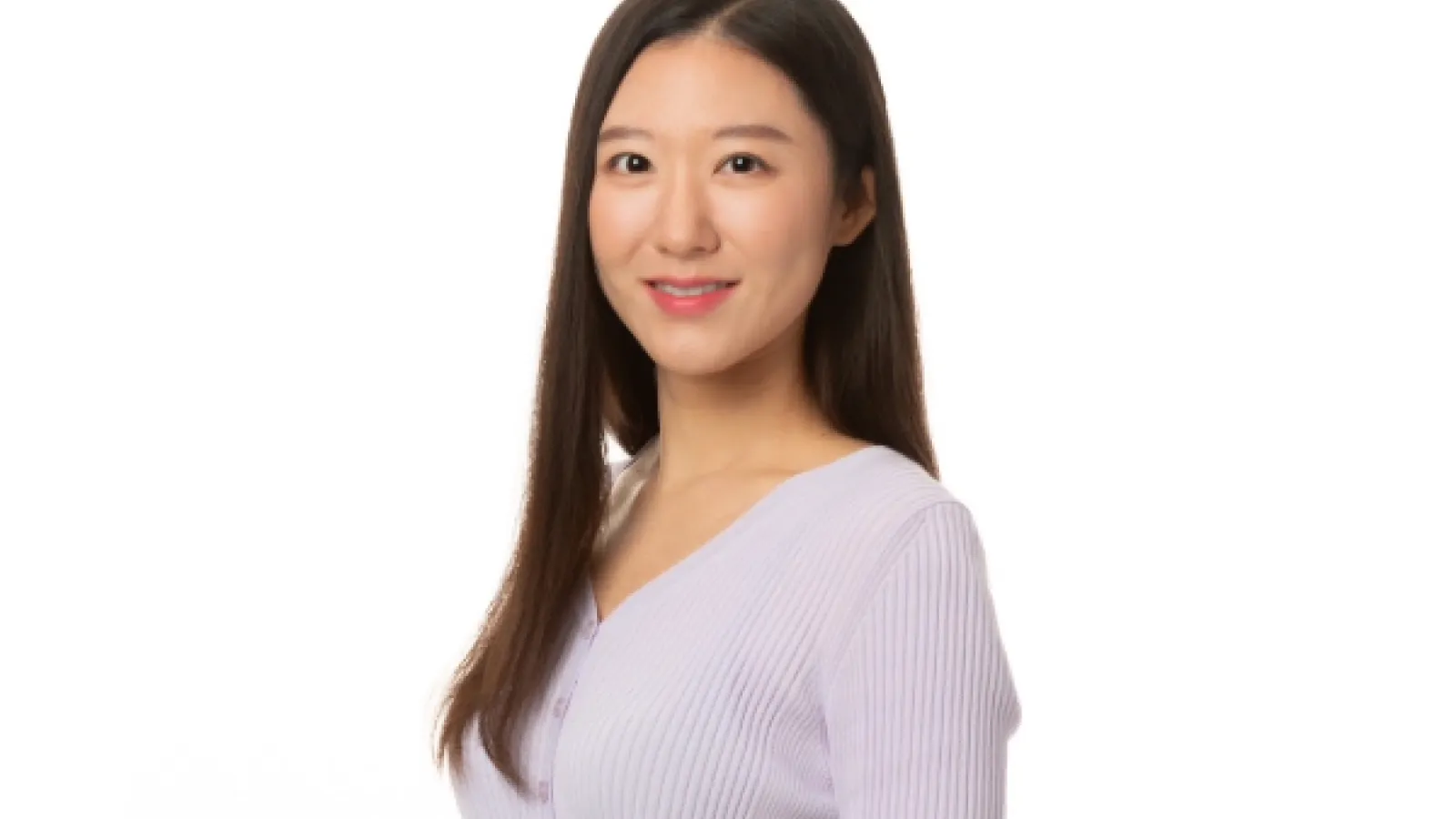
Join us for the Quantitative Psychology Colloquium with Dr. Oh-Ran Kwon (Assistant Professor, Ohio State Department of Statistics)
Title: Black-Box Knowledge Transfer for Distinct Feature Sets
Abstract: Pre-trained black-box predictive functions encode valuable knowledge, distilled from massive datasets and extensive computation. However, when the available input features come from an input space that differs from that of the black box, direct use is infeasible. A natural approach is to apply the black box through a mapping between the two input spaces, but this breaks down when the black box is highly nonlinear. Instead, in this talk, we introduce a method for transferring predictive knowledge from the black box to a different input space. Our approach decomposes the target prediction function into two components: a transferable component, which can be informed by the black box, and a non-transferable component, which captures information unique to the new space. We introduce a two-step estimation procedure aligned with this decomposition. We derive non-asymptotic prediction error bounds and show that transfer learning is advantageous over a non-transfer alternative, particularly when the non-transferable component is small or smooth. We further extend our approach to the case where multiple black-box functions are available and show that aggregating them provably improves predictive performance. Simulated and real data examples demonstrate the practical value of the proposed approach.
About Dr. Oh-Ran Kwon: Oh-Ran Kwon is an Assistant Professor in the Department of Statistics at The Ohio State University. Prior to her current position, she earned her Ph.D. in Statistics from the University of Minnesota and was a postdoctoral scholar at the University of Southern California. Her research interests span statistical machine learning, with a focus on prediction problems, and its applications in diverse scientific domains, including oceanography and chemometrics. She has developed machine learning methods for dimension reduction in high-dimensional settings. Currently, her work focuses on developing statistical methods that leverage auxiliary information across diverse data settings.